Delta Blues Explained
Solo singers with a slide guitar in the Mississippi Delta recorded a handful of 78s that went on to reshape Chicago blues and rock and roll.
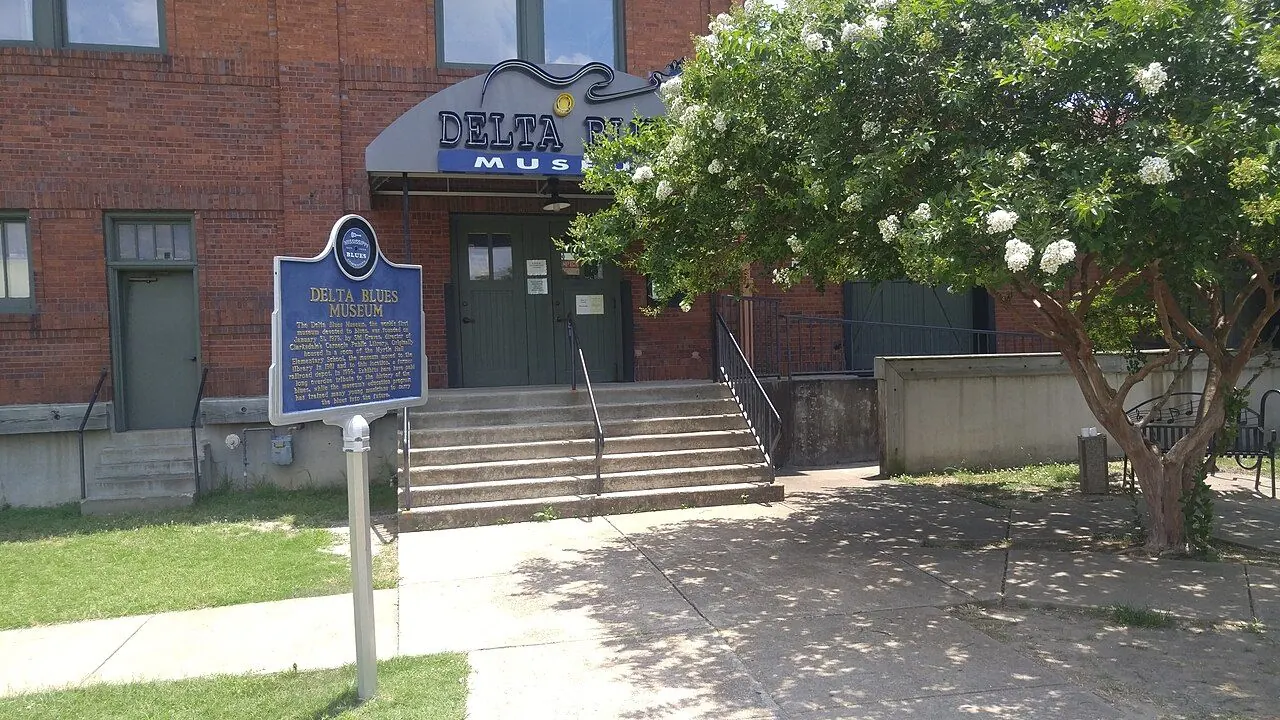
Photo: Chillin662 / Wikimedia Commons, CC BY-SA 4.0. Illustrative image.
Delta blues is a regional style of early 20th-century American folk music centered in the Delta of northwestern Mississippi: a singer accompanying himself on acoustic guitar, often with a bottleneck slide. Its pioneers shaped the blues recordings of the 1920s and 1930s and later fed the electric Chicago blues.
The Mississippi Roots of an American Tradition
The Mississippi Delta is a distinct geographic and cultural region in the northwestern corner of Mississippi, the flat farmland between the Mississippi and Yazoo rivers. Travelers and researchers reported blues there since at least the turn of the 20th century, though no commercial recordings were made until the late 1920s. The music began as a solo acoustic tradition, played at juke joints, on plantations and on street corners. Its signature techniques include sliding a bottleneck or knife along the strings to bend notes and answering the voice with guitar phrases in a call-and-response pattern, all driven by an aggressive, rhythmic attack.
The Core Delta Blues Musicians
Charley Patton, raised on Dockery Farms in Sunflower County, is often called the father of Delta blues. His "Pony Blues," released by Paramount in 1929, was one of the records that brought the label great success. Through his association with Patton, Son House first recorded for Paramount in 1930; sales were minimal in the Depression, but House is now considered one of the greatest of all Delta blues musicians.
House was a major influence on both Robert Johnson and Muddy Waters. Johnson, whose 29 recordings from 1936 and 1937 are widely regarded as an artistic high point of the blues, became renowned for his guitar technique and intensity, even as his life has become shrouded in myth. In 1941 and 1942 House made field recordings in Mississippi for a Library of Congress team led by Alan Lomax, and the same team made the first recordings of McKinley Morganfield, known as Muddy Waters, at the Stovall Plantation near Clarksdale.
From Delta to Chicago
In 1943 Muddy Waters moved to Chicago, and by the end of the decade he was setting the pace on the city's competitive blues scene. Chicago blues traded the lone acoustic guitar for electric instruments and a band, with drums, harmonica, piano and bass, loud enough to be heard in crowded clubs. Waters, B.B. King and Howlin' Wolf were all born in the Mississippi Delta region and influenced by the early Delta players, and generations of rock acts have recorded their songs and those of Robert Johnson. House himself left Mississippi in 1943 and was "rediscovered" in 1964, touring widely during the blues revival.
The surviving record is partial: commercial 78s and Library of Congress field recordings capture some players and miss many others, and details of early lives are often scarce. That is part of why the region's own institutions matter.
The Delta Blues Museum in Clarksdale, founded in 1979 as the world's first museum devoted to the blues, occupies the old freight depot at 1 Blues Alley; a Muddy Waters wing was added in 2012. Across the state, the Mississippi Blues Trail marks the places where the music was born and recorded, from Dockery Farms to Clarksdale. Start with the recordings of Patton, House and Johnson, then follow the markers; check the museum's own site for current hours before you go.