What Is Outsider Art
From Jean Dubuffet's art brut to Roger Cardinal's English coinage, a plain guide to a label that museums still argue over.
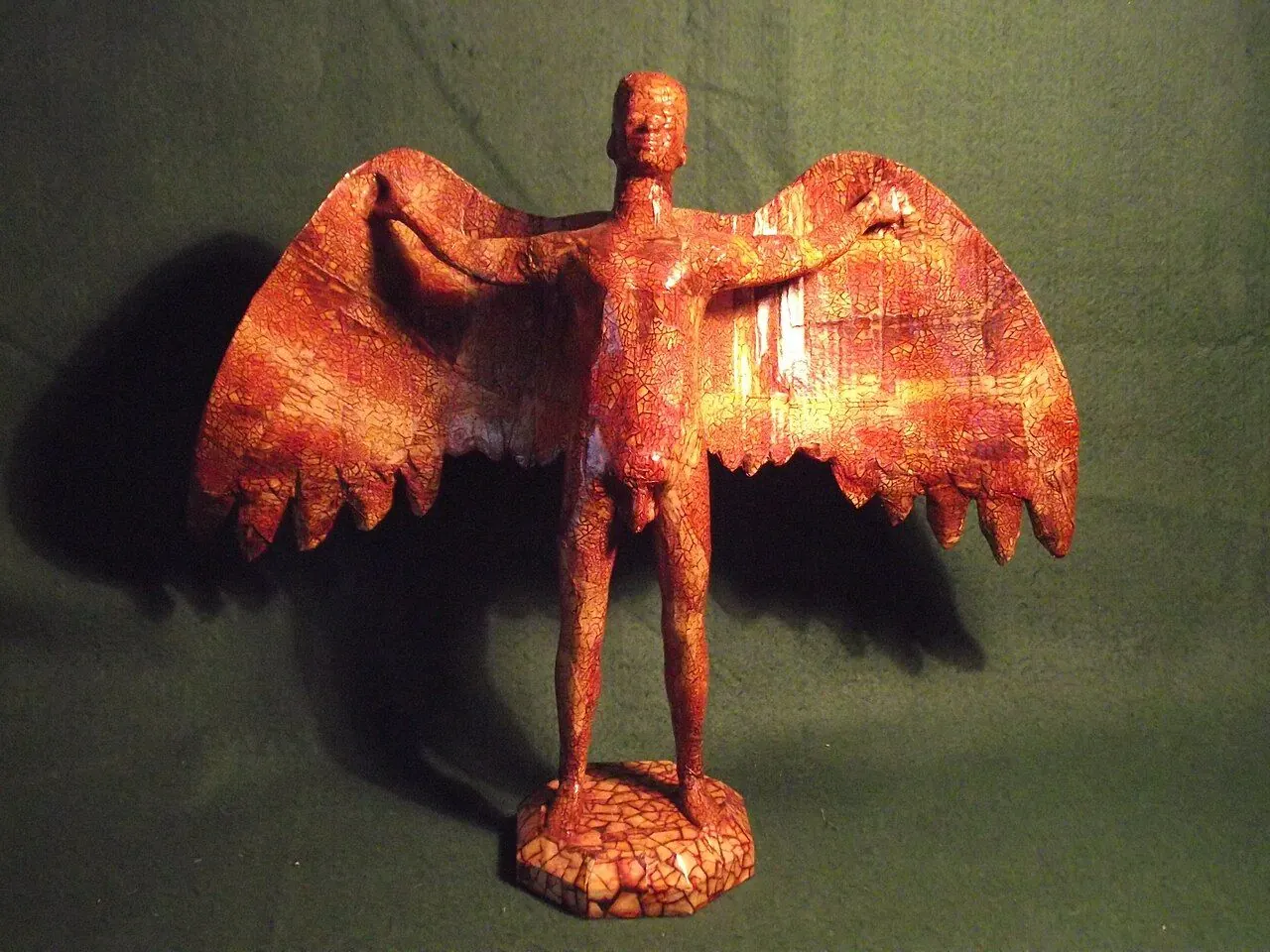
Photo: Kuriologist / Wikimedia Commons, CC BY-SA 4.0. Illustrative image.
Outsider art is a contested label for visual art made by self-taught people working outside the mainstream art world. The idea grew from French artist Jean Dubuffet's "art brut" of the 1940s and was introduced in English as its equivalent by art historian Roger Cardinal in 1972.
What the term means
In 1945, Jean Dubuffet coined the phrase "art brut" to describe art made by people untouched by artistic culture, working from their own resources rather than from the dominant trends of the day. He sought to celebrate the raw, spontaneous creativity of its makers, whom he saw as operating outside cultural norms.
In 1972, Roger Cardinal published a book titled Outsider Art to bring the concept to English-speaking readers. He had wanted to keep the French term, but his publishers chose "outsider art" instead. The simpler phrase gained wide traction, and it came to mean art made by people who were not professionally trained and who worked outside galleries, art schools and the prevailing art-historical discourse. Related labels include self-taught, visionary, vernacular and, for work rooted in community tradition, folk art.
Why the label is debated
Though it is intended to honor work from the margins, "outsider art" is problematic for some. Cardinal himself worried that it sounded as if it pitted untrained artists against an "insider" art world. The label can ask artists to "stay outside" even when they are doing sophisticated, inventive work, and it may imply they are outsiders in other parts of their lives. It has also become a marketing term that sets certain works apart in the marketplace.
Some argue it should not be a separate category at all, because the line between outside and mainstream is diffuse. Many museums now show self-taught artists alongside their trained contemporaries instead of strictly separating them.
Notable outsider artists
Some of the self-taught artists most often associated with the label include:
- Henry Darger (1892–1973): A reclusive Chicago hospital janitor whose typed fantasy epic, In the Realms of the Unreal, runs to more than 15,000 pages with hundreds of watercolor illustrations. It was found in his rented room after his death.
- Bill Traylor (1853–1949): Born enslaved in Alabama, he began drawing in his mid-80s in Montgomery and made more than a thousand drawings and paintings, mostly on discarded paperboard.
- Martín Ramírez (1895–1963): A Mexican-born artist who spent most of his adult life in California state hospitals, where he made intricate drawings of trains, horsemen and arches on pieced-together scraps of paper.
- Adolf Wölfli (1864–1930): A Swiss artist confined to the Waldau psychiatric clinic near Bern from 1895 until his death, who filled more than 25,000 pages with drawings, writing and musical notation.
In the United States, work of this kind can be seen at the Smithsonian American Art Museum in Washington, whose collection includes Bill Traylor and Henry Darger; the American Folk Art Museum in New York, home of the Henry Darger Study Center; Intuit in Chicago, which preserves the contents of Darger's room; and the American Visionary Art Museum in Baltimore.
Many researchers now argue that these artists should be valued for their artistry rather than for their biographies or diagnoses, and judged on the same terms as any other modern artist.