Start Collecting Folk Art
Train your eye in museums and fairs, get the paperwork in writing, and store your first piece the way conservators would.
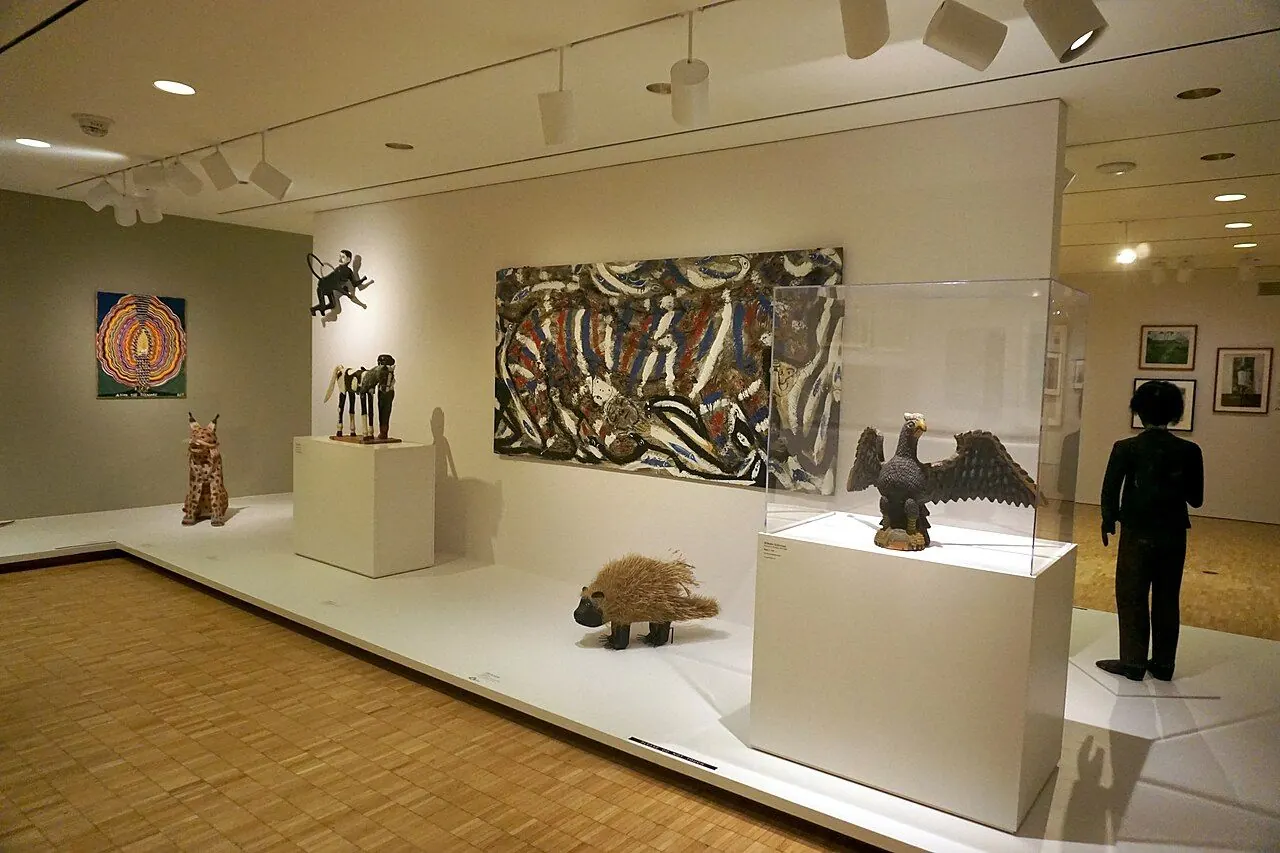
Photo: Michael Barera / Wikimedia Commons, CC BY-SA 4.0. Illustrative image.
To start a folk or outsider art collection safely, look at a lot of work first, set a budget, buy what you genuinely love, and never skip the paperwork: the object's history and a signed record of the sale matter more than a bargain price or a dealer's story.
Look first, then set a budget
Before buying anything, train your eye. Museums such as the American Folk Art Museum in New York, the American Visionary Art Museum in Baltimore and the Smithsonian American Art Museum in Washington show self-taught art of the highest level, and fairs such as the Outsider Art Fair, founded in New York in 1993 as the first fair devoted to self-taught art, let you compare dealers and prices in one room. Decide how much you can spend before you walk in, and treat a first piece as something to live with, not an investment.
Buying from a living self-taught artist raises its own questions. Some makers are elderly, isolated or not used to the art market, so pay a fair price, buy directly or through someone who represents the artist openly, and be wary of anyone who seems to control an artist's output or buys cheaply to resell at a large markup.
Start with the object's paper trail
Even for a first piece, never skip the documents. Yale's provenance research guide says it is often most useful to work backward from the object itself. Start by closely inspecting the front and recording visible inscriptions, signatures, dates or numbers, then check the back for stamps, stickers, seals or labels.
Next, ask the seller for written proof. For purchases, Museums Galleries Scotland's collections guidance advises getting a signed statement confirming that the vendor is the owner, the provenance of the object, and the original invoice and receipt. Write down the artist's name, the price, the date and place of purchase, and keep photographs of the piece front and back. The Smithsonian American Art Museum advises collectors to keep a record for each work with photographs, dimensions, materials, a description of condition, provenance and any conservation or appraisal reports.
These files become part of the paper trail that helps experts verify the item later. They are also your best defense against fakes and reproductions: a piece attributed to a famous self-taught artist with no documented history, a price far below the market, or a seller who cannot say where it came from are all reasons to walk away or ask an independent specialist first.
How to store and display it
To keep a piece in good condition, you can't just take it home and hang it anywhere. Museums Galleries Scotland says storage should be clean, dry, cool, dark and accessible, and that temperature swings and inconsistent humidity are key threats. Keep work away from direct sun, heat sources, fireplaces, and kitchens or bathrooms prone to leaks or high moisture. The Smithsonian American Art Museum warns against storing valuable pieces in attics or basements, where conditions fluctuate.
Use acid-free materials for wrapping and framing, and for works on paper choose archival framing with UV-filtering glazing. If a piece is damaged or fragile, do not repair it yourself: the Smithsonian American Art Museum recommends trained conservators and points collectors to the American Institute for Conservation to find one.
For that first piece, treat the purchase like a small archive: know what you are looking at, pay a fair price, keep the paperwork, and store it well. No paper trail, no deal.