Partner feature
8 min read
East Meets West: Macau’s Cultural Fusion in Art and Design
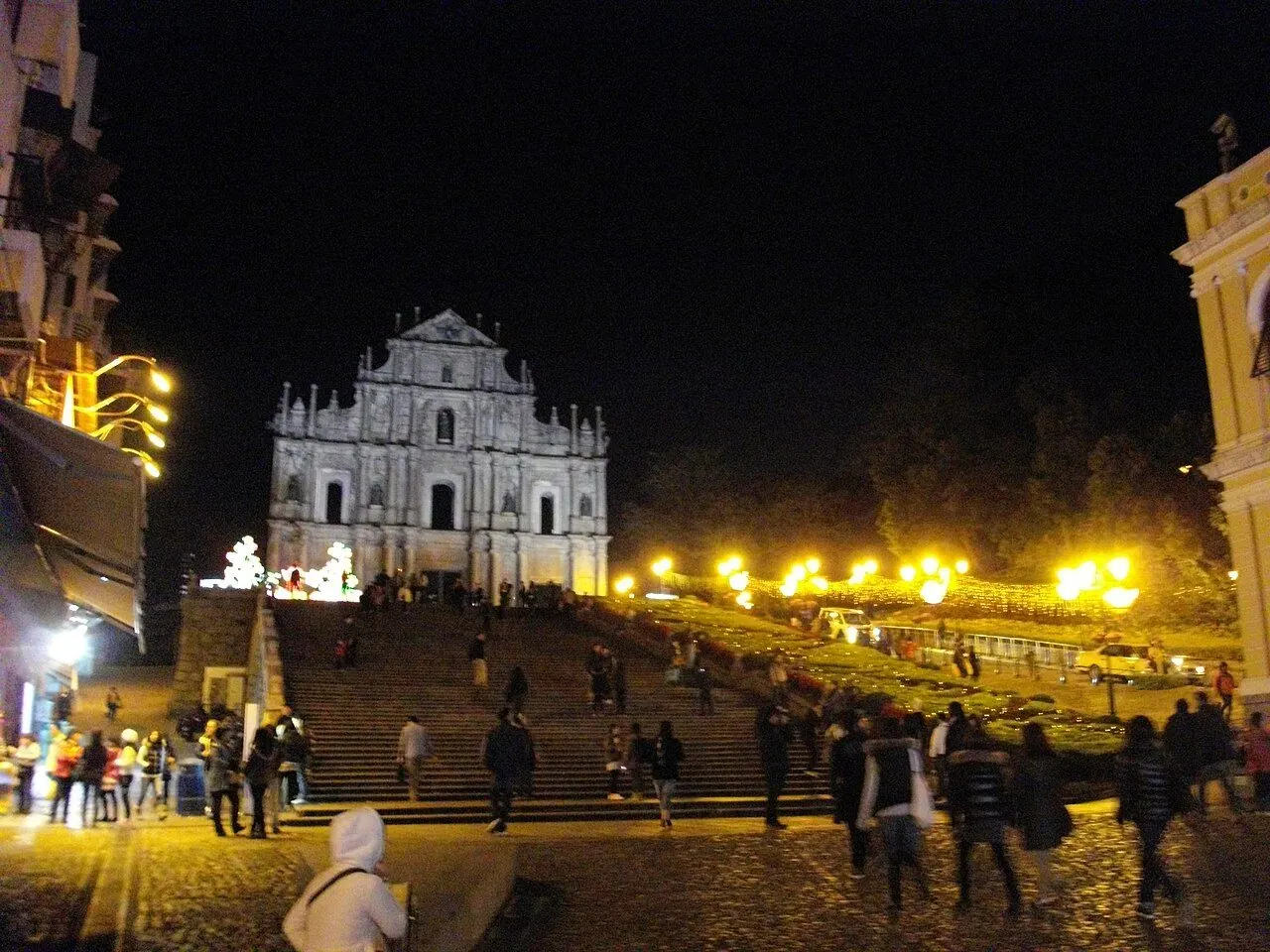
Photo: Abasaa / Wikimedia Commons, Public domain. Illustrative image.

Partner feature. This article was supplied by a partner and published on doo-nanny.com. It sits outside the editorial sections of the magazine. About partner content.
The stones move like waves under my feet. It is late light at Largo do Senado. The ground is a black-and-white mosaic, smooth and cool. A man calls out prices in Cantonese. A woman answers in Portuguese. Shop signs mix both scripts. A yellow church wall glows. A child runs over the curving pattern and laughs. This place looks simple at a glance. But it is not. Every line and color here tells a long story. You can read it if you slow down.
Field notes from one street
Stand still and scan the block. The tiles are in ocean curves, the kind you see on old squares in Lisbon. Look up: thin, green shutters of Lingnan style fold like fans over windows. Metal balconies carry leaves and curls in iron. A blue-and-white tile panel shows a ship and a saint. Beside it, a red paper charm guards a door. Letters in Latin sit next to compact brush strokes. The eye needs a second to adjust. Then the mix starts to make sense. It feels light, yet layered.
This is not an accident. The old town is a world record of this blend. See the full UNESCO listing of the Historic Centre of Macao to grasp how many styles and eras sit within a short walk.
A short detour through time
Traders came. Priests came. Craftsmen came. They met Cantonese guilds, boat men, cooks, and carvers. They built churches with baroque faces. They hung wooden signs with gold script. They carved stone, glazed tiles, and set them side by side. Street life and sacred art did not fight. They shared space. Money from trade paid for both. And both left marks that last to this day.
To plan a route that fits these layers, check the city’s official visitor guide. It helps match places with the right time and light, and it lists current shows too.
The workshop lens: how work gets done
Think of a small design studio in Taipa. A client wants a poster for a food fair. The team picks a palette: azulejo blue, egg-yolk yellow, a soft jade green from old shop signs. They need both languages on one sheet. Latin letters need space. Chinese has strokes that fill the square. The grid must shift to hold both well. The text must read fast in a crowd. They go to Coloane to touch tiles, feel glaze, note blue tones in sun and shade. They send a draft to the heritage board to confirm the logo will not clash with rules near a listed site. They tweak a curve, they open a counter in a letter, they tone down a red so it does not shout over a gold. Craft is in each small choice.
Guides and laws help makers respect the old while they build the new. When you need source facts, the Cultural Affairs Bureau posts clear notes on sites, events, and what is okay near key streets.
Fusion Index: a field guide
If you want to read the city like a designer, use the guide below. It links form to place, meaning, and use. For deeper roots and images, browse the Macao Museum collections. They show how motifs moved from ship hulls and chapels to shopfronts and parks.
| Calçada portuguesa mosaics | Portuguese | Senado Square, Largo do Senado | Public life, sea, movement | Pixel-like waves in new plazas and malls | Climb one floor for a top view; shoot at golden hour for soft shadows |
| Azulejo tiles (blue-and-white) | Portuguese | Near churches, old civic buildings | Faith, travel, memory | Graphic prints and murals in cafes and studios | Look for crackle glaze; avoid flash to keep color true |
| Lingnan shutter profiles | Chinese (Lingnan) | Taipa Village lanes, older shophouses | Shade, air flow, privacy | Laser-cut screens in hotels and galleries | Shoot side-on to show depth; morning light works best |
| Baroque pediments and volutes | Portuguese (Baroque) | St. Dominic’s, Ruins of St. Paul’s | Devotion, drama, craft | Smooth Bezier curves in logos and wayfinding | Frame a curve with a straight edge nearby for contrast |
| Red-and-gold door talismans | Chinese | Side streets off Senado, Rua da Felicidade | Luck, warding harm | Foil accents on menus, tickets, posters | Ask before you shoot at private homes; be polite and brief |
| Bilingual storefront typography | Hybrid | All districts; markets, bakeries | Trade, clarity, welcome | Variable fonts for Latin; balanced stroke density for Han | Crop tight; show how baselines and grids align |
| Neon calligraphy | Chinese | Older food streets, pawnshops, small bars | Identity, pride, night life | LED tubes bent to mimic brush flow | Use dusk light; meter for the sign, not the sky |
| Waterfront balustrades | Portuguese | Outer Harbour, near ferry piers | Guard the edge, mark the view | Concrete curves echoed in benches and rails | Include a passerby for scale; watch for glare on water |
| Festival banner graphics | Hybrid | Squares during events, temple fairs | Community, season, story | Brush textures in digital posters and AR filters | Catch crew at setup for clean shots; ask first |
Case study: from baroque to Bezier
Now look at the Macao Science Center. It sits by the water like a cone and a sail. It is sharp, smooth, and full of light. It is also by I. M. Pei, who knew this region well. The form is new, yet it nods to the bay, to ships, to sky and horizon. Curves feel like a calm echo of old scrolls and waves in stone below. Plans and images are here: Macao Science Center by I.M. Pei. The line from baroque volutes to these clean arcs is not straight, but you can trace it. Old grace, new tools.
Side note: the palette
Colors here carry mood. Egg-yolk yellow warms church walls. Cobalt sings on tile. Stone holds a gray that turns deep after rain. Shop greens feel fresh by day and rich by night. Neon throws a hot pink edge on wet streets. In fog, all of this softens, and the mix feels like an old photo. In sun, it snaps.
Gallery crawl: what to see right now
Start near the river, then cross to Taipa. In one morning you can see a city museum, a small studio, and a young gallery. Ask at front desks for small maps. Some spaces are on upper floors; do not miss them. When you want context for the region, the Pearl River Delta has deep art ties. The Asia Art Archive has open archival materials on Pearl River Delta art that help frame cross-border flow and big shifts since the 1990s.
If you track design as part of a larger city story, a stop at West Kowloon adds range. Browse M+ museum’s design and visual culture resources to compare how neon, signage, and public art play out in the wider bay. Then come back to Macau with fresh eyes and check how local studios answer the same briefs with their own twist.
Designing for play: casinos as total worlds
In Macau, a casino is not only tables and slots. It is a full set, built to manage time and mood. Ceilings paint skies that never end. Lights push gold tones on carpet reds. Signs must be clear at a glance in two scripts. Numbers avoid four; eights find pride of place. You smell a light sweet note in the air. Floors guide your path as much as arrows do. These spaces borrow from old motifs when they want calm, or go ultra sleek when they want speed. If you map which venues lean to heritage hints and which go bold and new, the official SpelHub guide has short, plain notes on feel and layout (Disclosure: we run this site).
Craft and graphic design: the bilingual puzzle
Type is where the fusion gets hard and fun. Latin letters have up-and-down rhythm. Chinese is boxy, dense, full of inner balance. Good signs in Macau make room for both. They tune stroke weight. They trim letter spacing. They set grids that flex without a mess. Posters may pair an azulejo frame with a brush stroke title. Menus can carry a serif for Portuguese dish names and a clean sans for Chinese text. None of this is new. For a longer past, see how Europe once looked to East Asia for form and myth in this overview: what is Chinoiserie. Today, the traffic goes both ways, with real exchange, not just a borrowed look.
Studios and schools: where ideas grow
On a quiet street, you may find a co-work floor where painters, typographers, and small brands share tools and light. Events bring in guests from across the bay. Pop-ups link food with art. To meet makers, check the Macao Design Centre for shows and fairs; it lists talks and small markets where you can speak with people at their tables.
The pipeline matters too. Graduates feed this scene with new skills. The University of Saint Joseph, Macau has programs in design and architecture that lean on local context. Their students often build projects with city groups, so studio work meets the street fast.
Micro-glossary
- Calçada portuguesa: black-and-white stone mosaic paving.
- Azulejo: glazed blue-and-white tile panel.
- Lingnan: South China style with light, air, green wood shutters.
- Shophouse: narrow, deep house with shop in front.
- Bezier curve: smooth digital curve used in vector art.
- Chinoiserie: European art trend that echoes East Asian forms.
Plan your own walk
Give yourself 90 minutes. Start at Senado Square. Note the wave pattern. Step into St. Dominic’s and watch light on yellow walls. Turn into the back lanes. Look for a green shutter, a hand-painted sign, a red charm on a door. Pause at a small cafe with tile at the counter. Cross to a studio in Taipa; many are one floor up. Ask before you take a photo of a person at work. Speak soft. Smile. Leave a tip if you learned something. Want a preview of objects and texts before your walk? Try the Macao Museum on Google Arts & Culture.
One day, three locks to turn
First, the Ruins of St. Paul’s: study the stone face close. Find the mix of East and West in carvings. Second, a single gallery stop in Taipa or near the ferry; ask what shows end soon so you do not miss them. Third, reach the water by late light and see a modern work, like the Science Center, glow against the bay. Three places, one story in three acts.
Closing thought
Back on the mosaic, the crowd still flows. This city does not pick a side. It speaks two visual tongues at once, and it is polite about it. The line, the tile, the sign, the curve—each one holds a piece of a long talk. If you listen with your eyes, Macau will answer in layers.
Quick FAQ
Method note: Walks done over three days in Senado, St. Dominic’s area, Taipa lanes, and Outer Harbour. Cross-checks with museum and bureau pages linked above.
Disclosure: This article includes a link to our casino review site. We operate that site and keep its notes updated as best we can.
Byline: Written by a designer and editor who has worked on bilingual wayfinding and city guides in the Greater Bay Area.
Published on: 2026-06-15 | Updated on: 2026-06-15